Neo4j的存储结构 #5

Description

数据类型
在概念上Neo4j有两个实体概念:Node和Relationship
Node - 节点
类似于Entity,包含:
- Property:KV对,用于存储数据
- Label:用于标记类型
Relationship - 关系
- First Node:起始节点
- Second Node:终止节点
- Label:标签
- Property:属性
逻辑存储结构
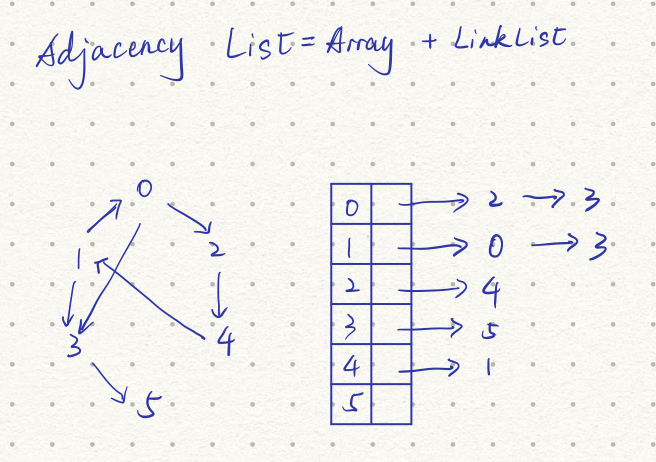
免索引邻接(Index Free Adjacency),在逻辑上可以看做邻接表(Adjacency List)
物理存储结构
Neo4j用于持久化的文件列表如下所示:
Store File                        | Record size   | Contents
----------------------------------------------------------------------------------------------------------------------------
neostore.nodestore.db             | 15 B          | Nodes
neostore.relationshipstore.db     | 34 B          | Relationships
neostore.propertystore.db         | 41 B          | Properties for nodes and relationships
neostore.propertystore.db.strings | 128 B         | Values of string properties
neostore.propertystore.db.arrays  | 128 B         | Values of array properties
Indexed Property                  | 1/3 * AVG(X)  | Each index entry is approximately 1/3 of the average property value size
接下来我们分别看一看每个文件中存储的格式。理解这些格式非常重要,因为它决定了Neo4j的数据结构和查询效率,如果你希望能够回答出“Neo4j是如何执行一次查询的?它底层数据是怎么存储的?”就必须理解它的存储格式。
Node - 9Byte
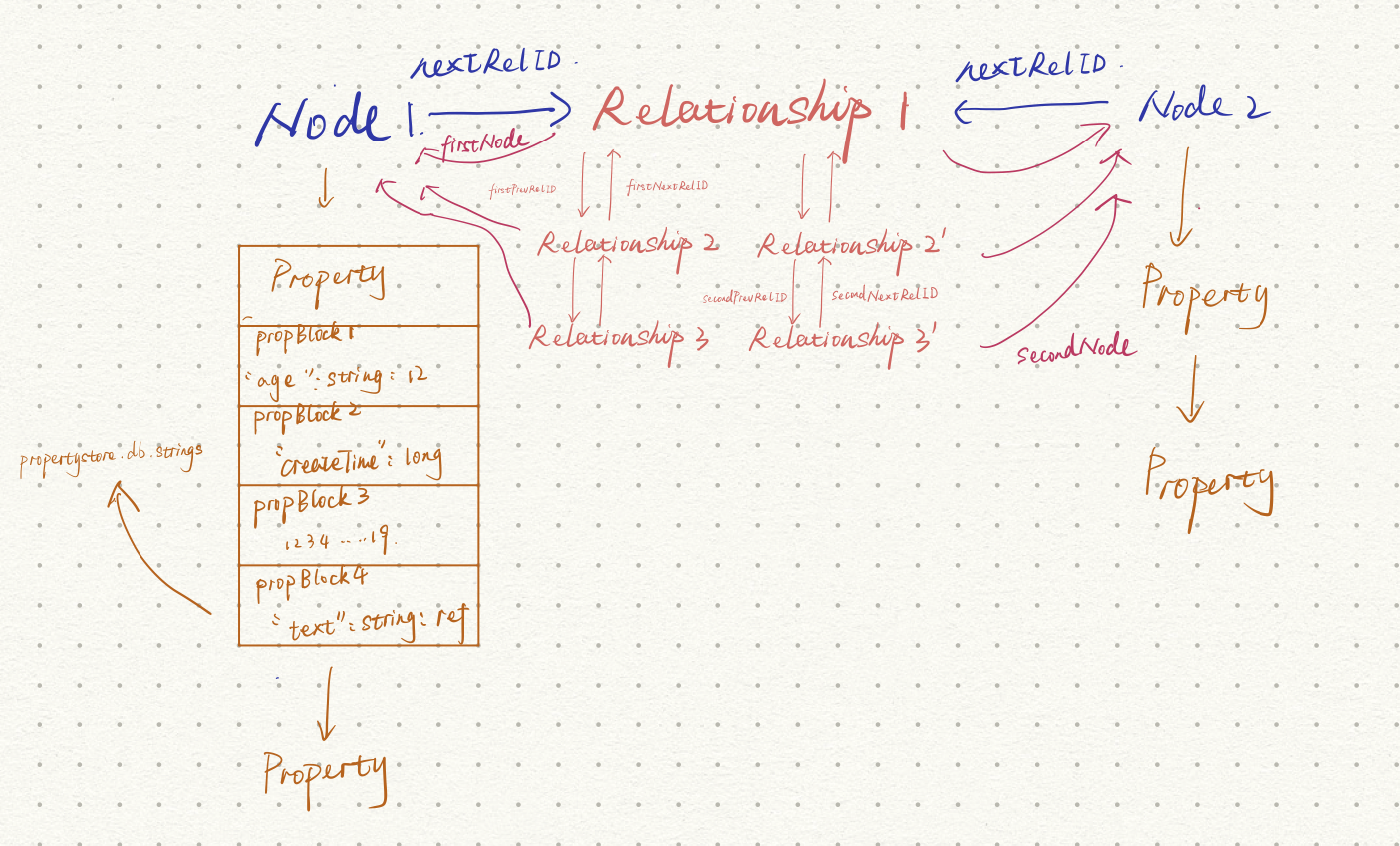
存储Node的数据,节点是以单链表形式存储的
存储文件:neostore.nodestore.db
格式:Node:inUse+nextRelId+nextPropId
格式含义:
- inUse(1Byte):是否删除
- nextRelId(4Byte): 下一个Relationsh ID
- nextPropId(4Byte):下一个Property ID
Relationship - 33Byte
关系是以双链表的形式存储的
存储文件:neostore.relationshipstore.db
格式:Relationship: inUse+firstNode+secondNode+relType+firstPrevRelId+fristNextRelId+secondPrevRelId+secondNextRelId+nextPropId
格式含义:
- inUse(1Byte):是否删除
- firstNode(4Byte):起始节点
- secondNode(4Byte):终止节点
- relType(4Byte):关系类型
- firstPrevRelId(4Byte) & firstNextRelId(4Byte):起始节点前一个和后一个关系的id
- secondPrevRelId(4Byte) & secondNextRelId(4Byte):终止节点前一个和后一个关系的id
Property - 37Byte
实际的属性如何存储?
每个Property可以存储4个8Byte的propBlock,每个propBlock可以包含key或value或两种都有。如果一个Node的记录。Property之间以单链表形式关联。
Key和Type占用3.5Byte(key-4bit, type-24bit),Key的字面量存储在"Indexed Property"
Value的占用不固定:
- boolean, byte, short, int, char, float - KV存储在同一个block中
- small long - KV存储在同一个Block中
- big long或double - Key占一个Block,Value占一个Block
- String/Array的引用 - KV在一个Block
- short string或short array - Key存在Block中,如果剩下的Block空间能放下就放在一个Block中,放不下就存指向"动态存储文件 - 128Byte"的指针
- long string或long array,8Byte放不进去就存储一个指向"动态存储文件 - 128Byte"的指针
存储文件:neostore.propertystore.db
格式:Property: inUse+propBlock+propBlock+propBlock+propBlock+nextPropId
格式含义:
- inUse(1Byte):是否删除
- propBlock(8Byte)*4:属性块,存储key或value或都存
- nextPropId(4Byte):下一个属性ID
动态存储文件 - 128Byte
用于存储String和Array这种很长的数据结构,可以由多个块组成
存储文件:
neostore.propertystore.db.stringsneostore.propertystore.db.arrays
FAQ
Q:如何根据ID查找链表下一个节点?
A:因为数据结构定长,因此可以以O(1)复杂度计算下一个元素的位置。比如ID=100,下一个元素的数据起始点在900Byte的位置。
Q:为什么数据类型要以定长格式存储?
A:便于根据ID * Length快速查找